Montessori in the Home: ideas for infants

“The first essential for the child’s development is concentration. It lays the whole basis for his character and social behaviour. He must find out how to concentrate, and for this he needs things to concentrate upon. This shows the importance of his surroundings, for no one acting on the child from outside can cause him to concentrate. Only he can organize his psychic life.”
The Absorbent Mind p 202, Chap 22
20131031-102840.jpg

I have always advocated for the belief that it is not the “stuff” but the experiences that are important to a child. A song sung by a loved one is just as stimulating as any gadget to a baby. However, I’m asked on occasion for ideas of Montessori inspired infant materials, so I thought I’d share a few.
At a basic level you are looking for something that will delight the child, but many would be surprised where that delight can come from.
From a Montessori perspective, the items would ideally be made of natural materials. This gives the child an accurate sensorial experience. Wood feels very different from wicker and cotton very different from steel, but all plastic feels the same. Loud sounds and bright lights offer little in the way of concentration and often overwhelm or overstimulate.
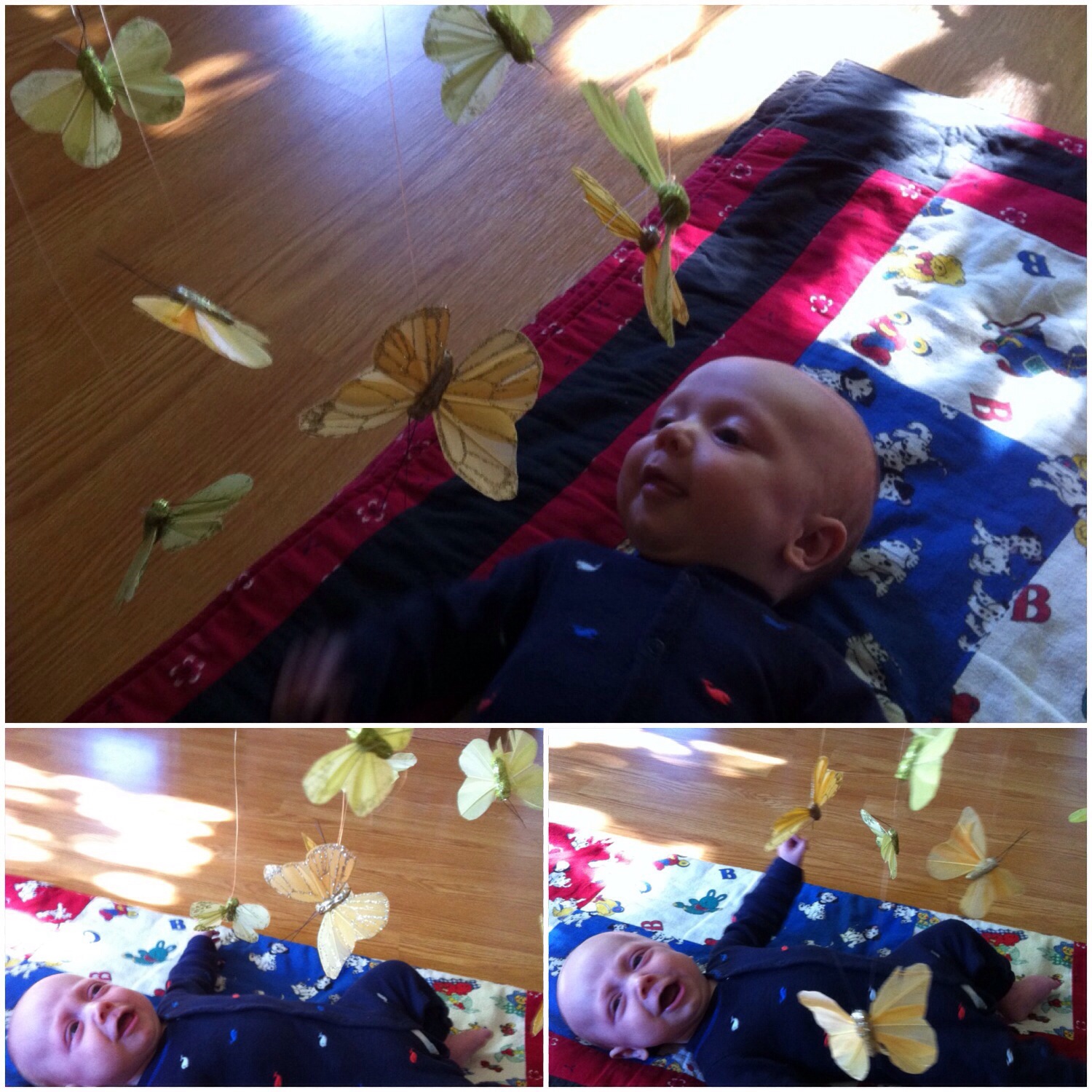
In the very early months, mobiles and mirrors that an infant can concentrate on are often all that is required for “toys”.

20131031-104409.jpg

I love mobiles. There are a series of Montessori Infant Mobiles that can easily be made/bought, but it takes very little time to attach some items to a base and hang it from the ceiling. I made the above mobile by cutting out circles from some pretty paper I had and then stringing them into chains and hung it from a ring. This is not one of the Montessori mobiles, but is simple, beautiful and allows him to concentrate.

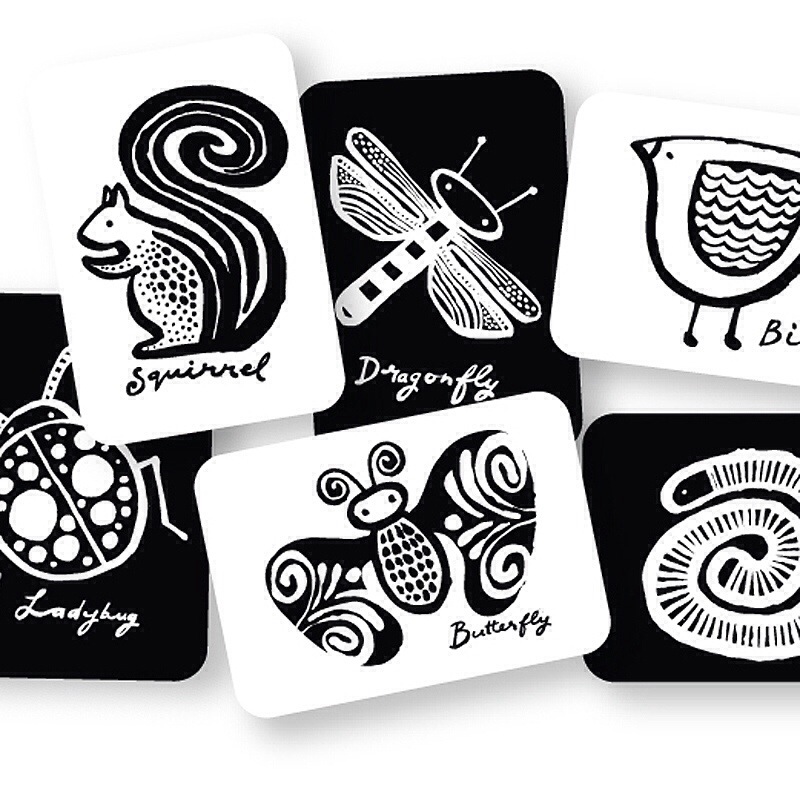
Black and white images printed onto cards are a favourite as well with younger infants. There are many out there. I love
Wee Gallery Art Cards. There are also many beautiful Montessori inspired options on Etsy.
20131031-115555.jpg

In the background on Quentin’s first low shelves are some “Treasure Baskets”. When the child is more mobile, they love looking at, grabbing, mouthing, listening to items in a treasure basket. Both Deb and Kylie have great ideas for treasure baskets for young infants. Even at this age a child has a strong sense of order. Baskets are usually kept to a single idea. You can put anything in them. A kitchen basket may have a spatula, flipper and whisk. Or maybe sounds. Or colours. The possibilities are truly endless.

The brown box on Quentin’s shelves is a homemade Object Permanence Box. I made it out of a square post office mailing box and covered it with kraft paper. I made three: a large round hole and ball, a small round hole and cylinder shaped block and a small square hole and square block. These are a great challenge for older infants. He used them right up until just after his first birthday.

These were his first materials. We supplemented these with lots of books and music and outdoor time. Looking back a year later, it went so quickly. It’s often a huge stress for parents to provide the “right toys for optimal development”. I think what’s important to focus on instead is providing quiet uninterrupted time for the child to concentrate and explore their world.

Montessori Practical Life: Baking – Where to start

Do you bake at home? It’s one of my favourite things and yet it was (shamefully) the thing I had not yet given Quentin a real opportunity to do. He would do a small part. Turn on the mixer, get out the bowl, but really he would just work in his kitchen while I did it. Maybe once in a while mix in the flour.

What was stopping me? I don’t know. How complicated it would be. Or the mess factor I guess.

How very UN Montessori.

I decided to take a leap and plunged in…with something very simple.

20131001-193901.jpg

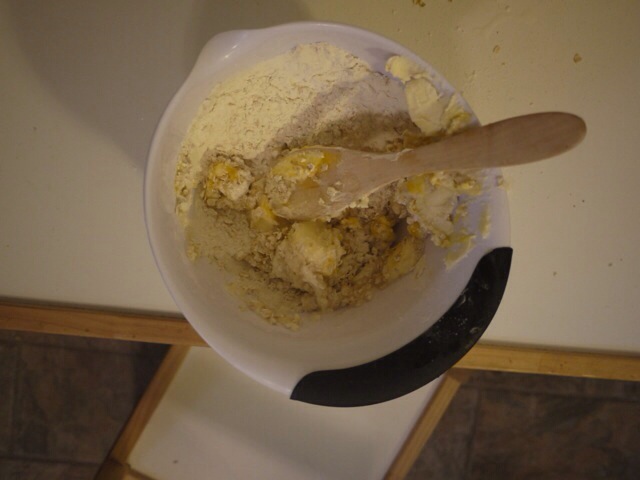
At his weaning table, ingredients divided into bowls ahead of time, some of the dry ingredients premixed.

20131002-153015.jpg

He started with stirring the oats already in his mixing bowl. I asked him if he wanted to pour. He said yes.

20131002-153358.jpg

20131002-153417.jpg

Then he wanted to stir for a bit. There was a small “sampling”. He didn’t like it.

20131002-153520.jpg

20131002-153634.jpg

He eventually said “Done”, got up and took off his apron. I cleaned up his table, got out his lunch and he ate while I rolled the Cranberry & White Chocolate Cookies into balls and placed them in the oven.

So what did I take away from it all? It wasn’t hard to do. The pre measuring could have happened during a nap or after he went to bed for the next morning, but I did it while he was just in the other room and it didn’t take long. It was good that I had lunch ready to go so he could move onto something and I could finish and clean up. It was also good that it was a simple recipe. No exact measuring, no complicated ingredients.

I also saw the concentration, and delight in Quentin’s eyes throughout the process. He named (repeated the name) of each ingredient as it was added, and he knows that he made something for the family. He contributed to family life which is a big deal in the Montessori world.

The best part was just being able to share something that I love with him.

Our Day in pictures

20130925-202314.jpg

It was a day that found us unexpectedly at home.

From the top left: Painting after breakfast in the work space. Magazine reading. Foose ball match between Anthony and I. Quentin watches but doesn’t try to interfere. Quentin helps with his laundry.

Middle Row: Quentin and I walk to get the mail. We spot a puddle and come back with boots on. We need eggs for baking. A trip to the market is too far for Quentin to walk. Anthony pushes him.
With eggs ready Anthony bakes banana loaves while Quentin watches, too tired to help.

Bottom Row: Up from his nap, enjoying the loaf his Brother made. Anthony working in the yard. The late afternoon has brought the sun. The leaves are starting already. A “thank you” for helping with the leaves. Quentin’s first time in the tree house. “No Anthony, I will not let him ride up in the bucket!!” After dinner, back where the day began. This time Anthony is finishing something for school and Quentin is quietly putting his wooden acorns through the hole in his rocker.

This was 7am-7pm.

There was more. Meals, trips to the potty, book reading with Quentin before nap. Sewing with Anthony while Quentin napped. Anthony vacuumed before we even went downstairs to the workspace this morning. Rob came home from work, Quentin had a bath and went to bed and Anthony packed his lunch for school tomorrow.

Tonight (like most nights) we relax either together or everyone doing their own thing. Sometimes we tidy up a bit, sometimes not.

Usually our days apart fly by, almost at light speed. I’m so grateful for this day that the boys and I got to spend together. Looking back through the pictures, I’m even more grateful that it took its time.

The Magic of Montessori

I haven’t really written about Quentin’s journey into the world, and I’m not sure I’m ready now.

The night before his early morning (5:36am) birth, as we waited in the hospital, the medical team now sure that the contractions were not going to stop, the Paediatric Doctor came into our room. The message he brought was one we had been working so hard from the first ultrasound to avoid.

“A baby born this early……blindness, hearing loss…..mental retardation.”

I don’t really remember much else of that sentence, but I remember the next two clearly.

“We’ll have to take him right away. You (my husband and I) and he (my still unborn child) are going to have a long road ahead”.

20130908-164027.jpg

He was beautiful to us. Right from the beginning.

20130908-164252.jpg

This is him weeks later in the Neonatal Intensive Care Unit technically not even born yet. Holding his face, like he did on so many of the ultrasounds.
While we waited for his homecoming, we went over all of the options in care available to us. His hearing and vision were fine and he did not require any immediate physical therapy. Preemies born this early (and earlier) are delayed in their development. An Infant Development Nurse was assigned to Quentin. She would come to our house once a month and help us form a plan to help him “catch up”. She would watch for areas that perhaps we could pay extra attention to.

We didn’t need to talk for long. There was already a complete developmental package available to us and it began at the hour of birth. It covered every area: the ways to soothe him, the essential materials needed, even the way to organize the infants room. It was all broken down and categorized for us. All we had to do was follow it. The Absorbent Mind would do the rest.

This is the Magic of Montessori

This is Quentin today:

20130908-202854.jpg

His nurse, a wonderful, caring women embraced Our Montessori Life from day one, having no prior knowledge of the pedagogy.

On her 12 month visit she reduced his visit schedule to once every 3 months. “It’s amazing that he can do that.” She kept saying throughout the visit.

Last Wednesday (16 months) she came again.

“I see no reason to continue to follow him.”

“Children his age, even his birth age, aren’t usually able to do those things (puzzles, pouring, matching, chores).”

I didn’t say anything at first. Maybe the huge grin on my face prevented it. But I wanted to say that actually, children his exact same age all around the world are able to do these exact same things. They do them in homes and schools and church basements and mud huts. I wanted to say that we are part of a community, that its all laid out. I wanted to say that we just did what others have done for over 100 hundred years before us and that all we did was to start down the path. I wanted to say that all children could do it, if just given the chance. But I didn’t. I just stood there.

As she was leaving she shook her head and said again that she just couldn’t believe it.

This time I didn’t hesitate. I managed to say: “That’s the magic of Montessori.”

Care of Self and Others = Family Time

20130901-115856.jpg

Grace and Courtesy and concern for others: offering food, saying “please” and “thank you”, and other good manners appropriate to the child’s culture, modelled by adults for very young children.

-The Joyful Child Montessori, Global Wisdom for Birth to Three – Susan Mayclin Stephenson

In our house that translates into spending time as a family doing activities that the boys enjoy.
The easiest and often most rewarding is to go for a walk.

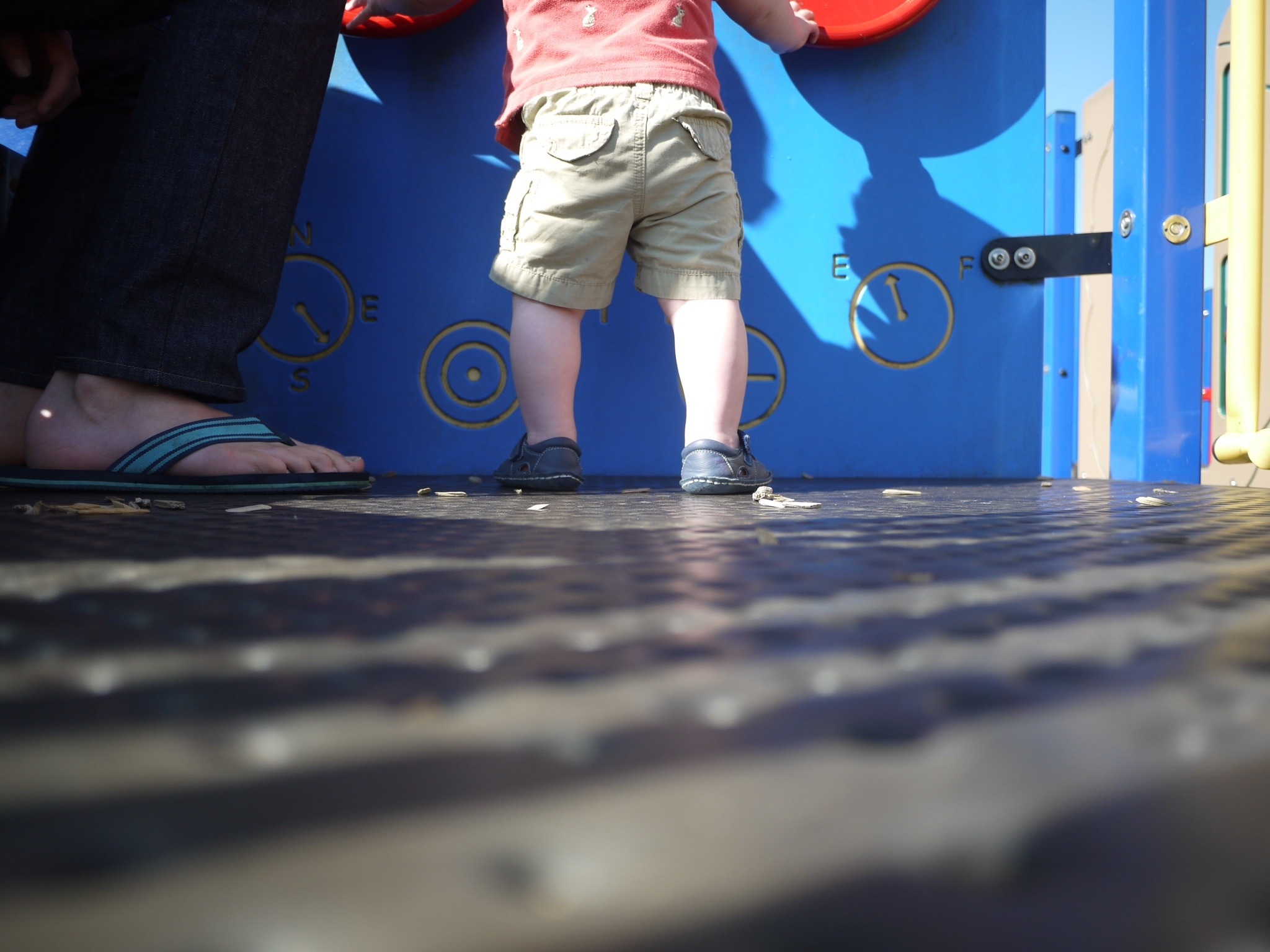
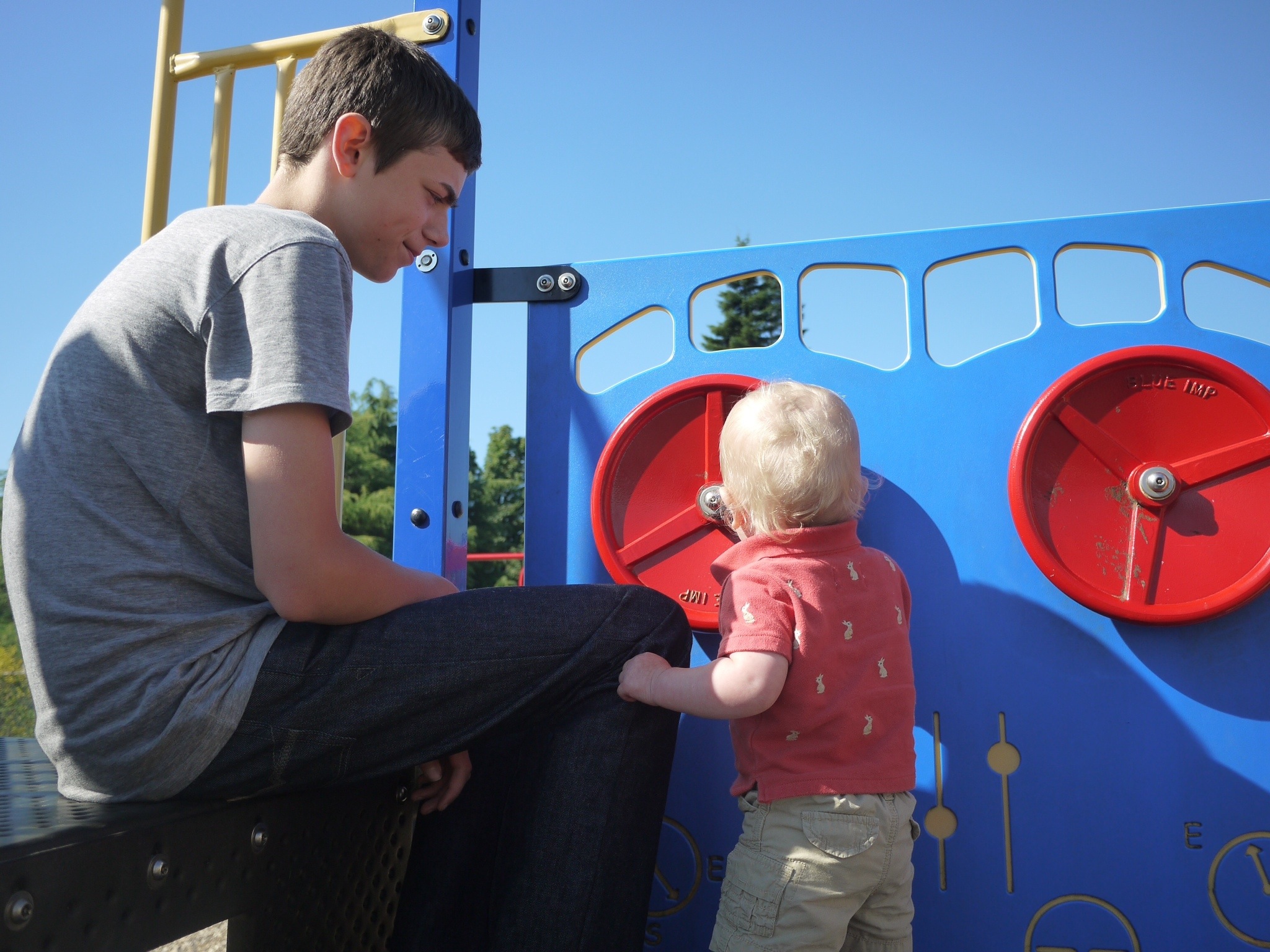
Today we stopped at the playground first. All of us model gentle respectful language with each other. Anthony is a great role model for Quentin. He is calm, and speaks respectfully to him.

20130901-121909.jpg

“Quentin, would you like a turn with the wheel?”

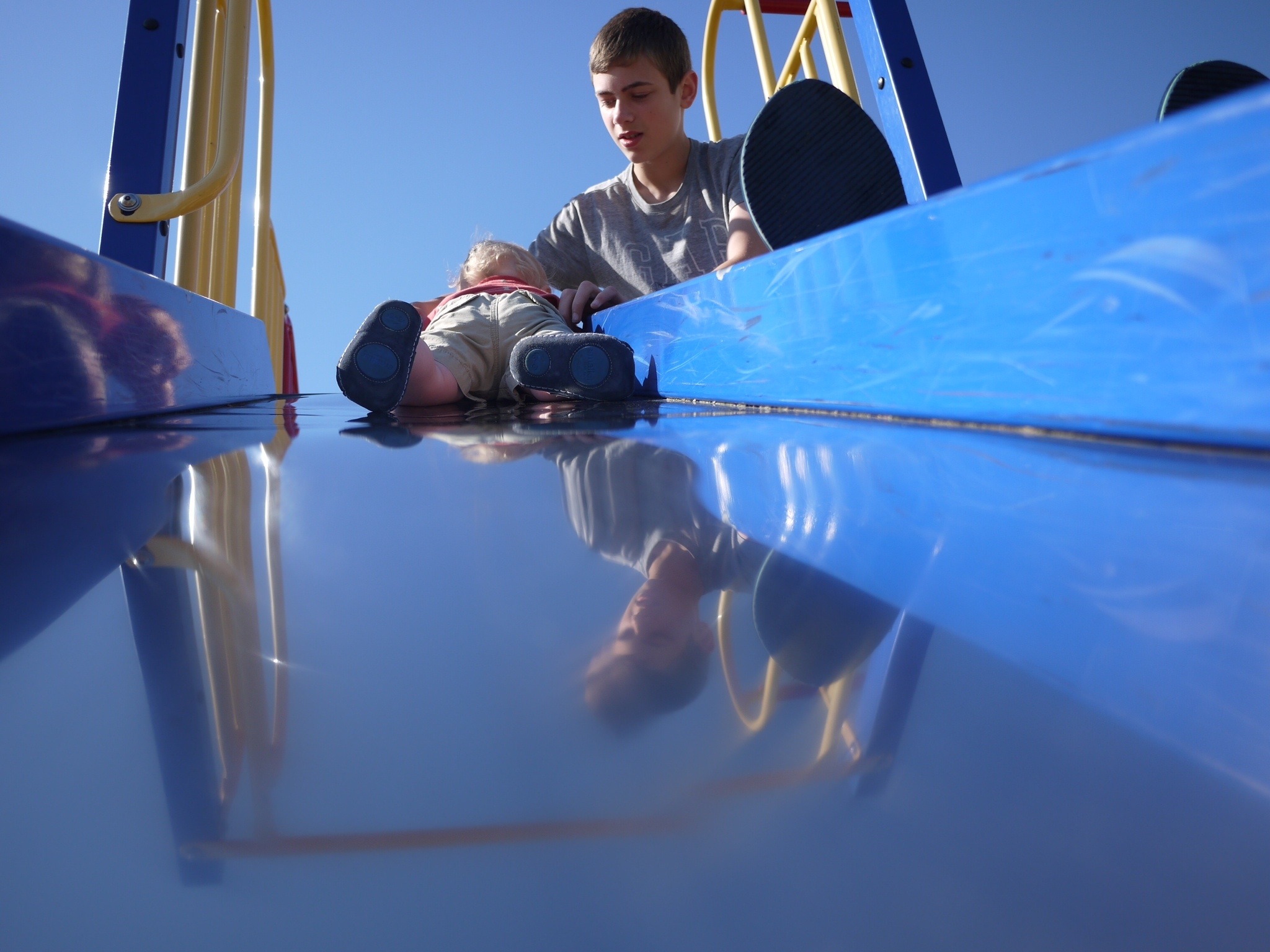
Besides all this modelling we also just had a lot of fun.

20130901-122149.jpg

20130901-122231.jpg

20130901-122301.jpg

We stopped at a local shop for some freshly made “sweets” and coffee. Then we walked home.
The rainy season will return soon. It’s nice to take advantage of the good days.

Back at home, when I had finished putting things away, I came out to the front yard to find this:

20130901-122810.jpg

Montessori Book Review

20130822-194202.jpg

This book is one of the gentlest, guides to Montessori in the home I have ever read.

Broken into three parts (the 1st year, 1-3 yr olds, adults roll) it uses clear language to describe the different Sensorial Periods, and how a home environment can be easily modified by parents to help us support the immense inner potential of a child beginning at the hour of their birth. Not wanting to step on the toes of anyone else that has reviewed this book, I wanted to write about how this book made me feel.

As I said I was surprised how it reads like a novel, not a “Montessori Text”. It didn’t make me feel confused, or “dumb”. Instead it showed pictures. Lots of pictures all the way through of children using materials, and parents offering experiences to young children. Many of the pictures I felt a connection with because we have done the same thing with our boys.

There are no charts or graphs. Nothing to put that terrible little seed of “my child doesn’t do that” into my brain. Instead the book simply speaks of things to try in the general age groups mentioned above.

For example:

A mat on the floor, in a room that has been completely prepared for safety, allows a child to come and go, exercising all his developing abilities.

I would recommend this book to anyone who is pregnant and interested in Montessori. I would also recommend it to those parents that are like me: seeking a simple, gentle, but thorough guide of how their child sees the world, and what we can offer them in support of themselves.

Our Shelves 15 Months

20130817-085518.jpg

A Prepared Environment: A natural, beautiful space that is prepared with cognitive and social developmentally sequenced materials.

At 15 months he’s walking (sort of) and going through an intense Sensitive Period for vocabulary.
With this in mind, I have put some new activities on Quentin’s shelves.

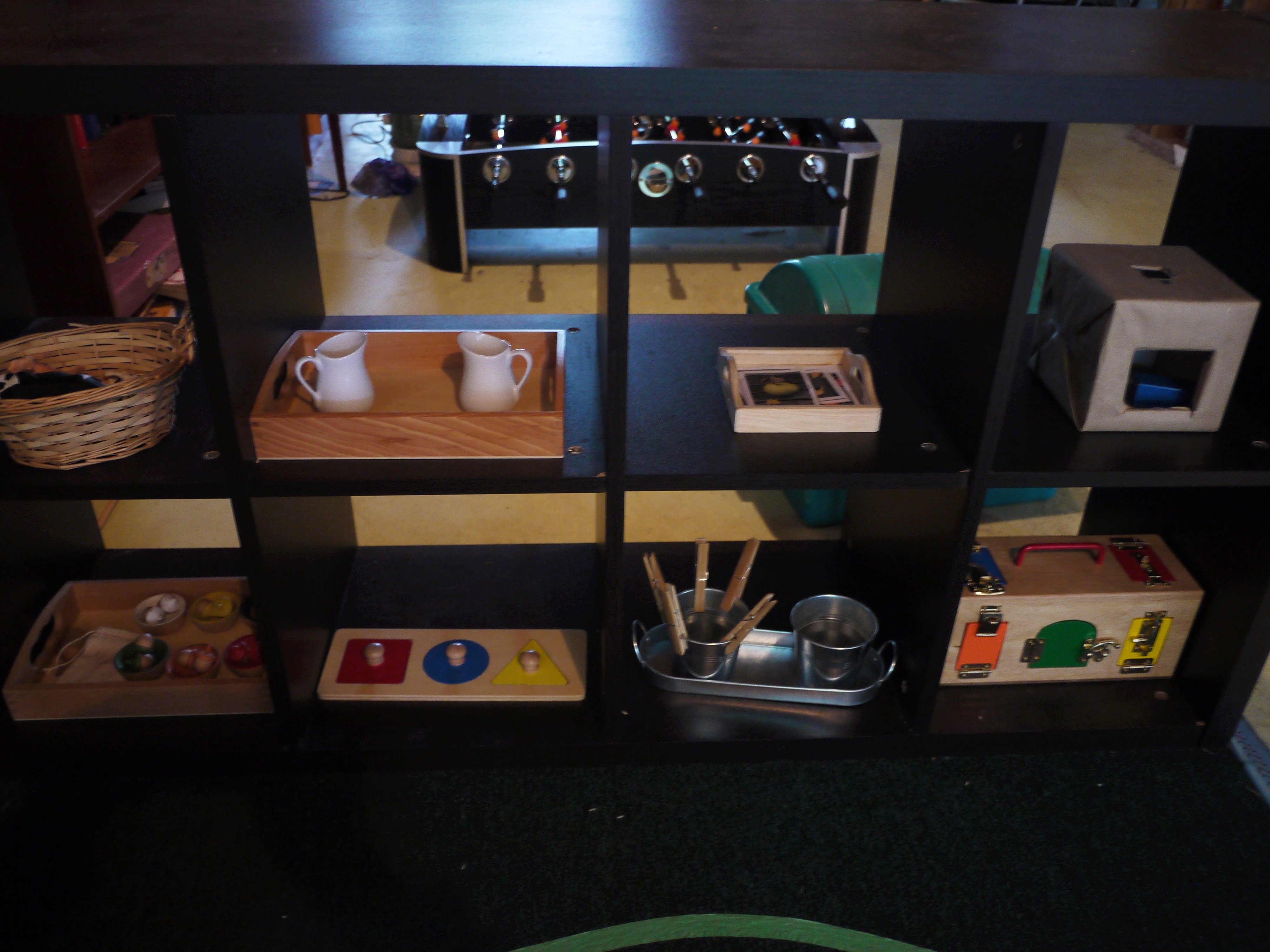
From top left: A basket of animals featured here. Next, a Practical Life dry pouring work. This is his second dry pouring activity and he is really refining his coordination of the wrist. His pouring has gotten much better. Next, his Fruit &Veg nomenclature cards featured here. I’ve put 3 pairs in the tray: apple, banana, carrot. He recognizes each picture, but doesn’t always match the carrot correctly. Last on the top is a DIY imbucare box with a rectangle block. I’ve just switched out the round cylinder box he had there before. Sometimes he forgets that you have to turn the rectangle to fit the sides properly, but mostly he gets it. This won’t engage him much longer.

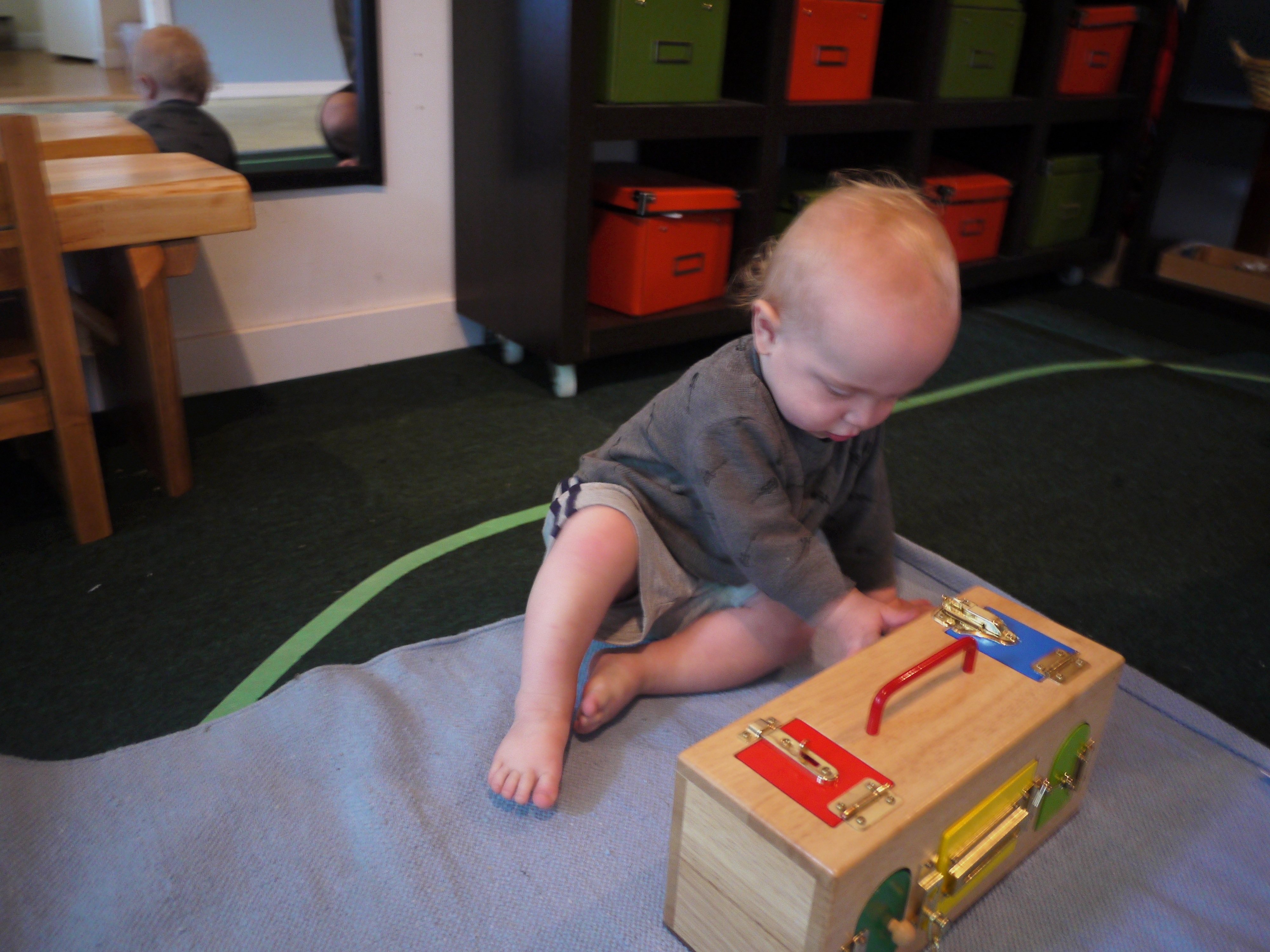
From bottom left: A tray of wooden painted acorns for colour matching. Quentin actually prefers to use this as a touch sensorial material. Over and over he picks up as many acorns as he can in one little fist and then carefully puts them back in the tray (not matched to the proper colour). Next a shape puzzle. He can now take out all the shapes and put them back correctly. Next, a DIY clothes pin pincer grasp activity. He mostly still pulls the pins straight off without the ability to “pinch” them open. However, I continue to demonstrate the correct way and leave it at that. Lastly a lock box. Thanks to Rachel for her insight on this amazing material. He can now work most of the bigger locks. Although it is too heavy for him to carry, he still drags it out and uses it everyday.

20130818-201411.jpg

I finally decided on this work mat from Montessori Services. It works well for Quentin as it is not too heavy.

It’s amazing to see that after months of me modelling it, Quentin now stands up, picks up whatever he has been working on and tries to put it back on the shelves. A “Keeping it Real” moment: he usually drops it halfway there. But he’s trying to do it. I have never given him a “Lesson” (demonstration). I just slowly, silently, pick up the material with both hands and slowly carry it back to the spot where it was on the shelf.

Although I have seen it many times before with many different children, the Absorbent Mind is truly a humbling and awe inspiring thing to witness.

Magnet Work at 15 Months

20130813-191512.jpg

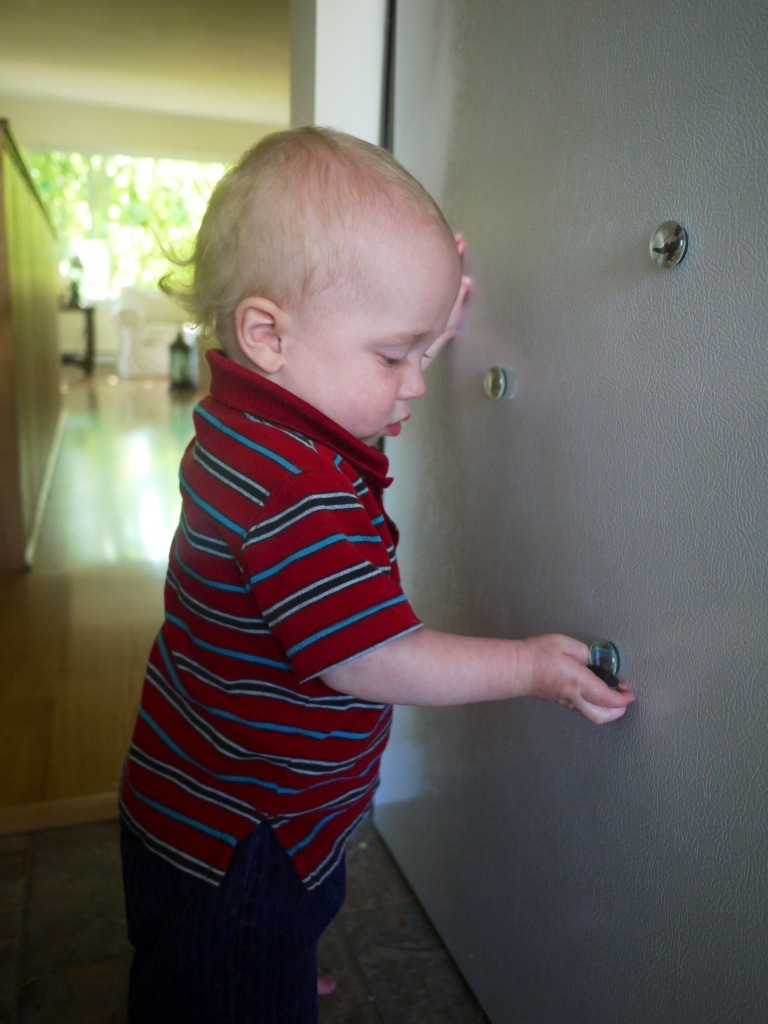
I set up 4 magnets on the side of the fridge today. This was Quentin’s first real opportunity to use magnets uninterrupted.

20130813-192312.jpg

20130813-192346.jpg

They are small round glass stones with a nature print on the back and then a magnet. He enjoyed the sensorial experience. Rolling them in his hand and placing them one by one on the fridge. He spent over 30 minutes doing this. He even surprised everyone by saying “magnet”. He experimented by sticking them to the wall (with obvious results) and the heat register (which is not in use currently).

These would be easy to make with craft supplies. I’m thinking of family faces or his other interests such as vehicles and animals, but really you could make anything. I could cut out pictures and glue them to the clear stones before glueing a magnet on the back. Quite simple and fairly inexpensive I think.

This quiet game reminded me that literally everything in his world is still new and exciting. I allowed him the time to try it all out.

20130813-192950.jpg

Perhaps a disclaimer is needed: These are magnets and could potentially be dangerous if swallowed. When using any material that may cause harm, (marbles, kitchen tools etc.) I have both eyes and my full attention on Quentin at all times.

Our Montessori Toddler bedroom transition

20130805-135038.jpg

It was time. I hated the crib. In Montessori Infant Communities/Nido’s babies sleep on firm mattresses on the floor. We live where it’s damp most of the year. With the dampness comes mold. Everywhere. Our beds have to be elevated to allow for airflow. So we had a crib, and I waited for the day he could independently climb into his bed.

The day is finally here. His low shelf continues to hold some creative materials. A wooden drum, small basket of wooden blocks and a basket of trains. Everything else with the exception of the Practical Llife kitchen items and his Care of Self area in the bathroom is downstairs in the boys work area.

20130809-194957.jpg

The table and chair in Quentin’s dressing/Care of Self area were made by my Great Grandfather. I’m so pleased that they are a part of Quentin’s room. This is where we help him dress in the morning, and comb his hair. He loves looking in the mirror when he’s combing/I’m combing his hair. His little book bag was a custom made 1st Birthday gift.

20130809-195823.jpg

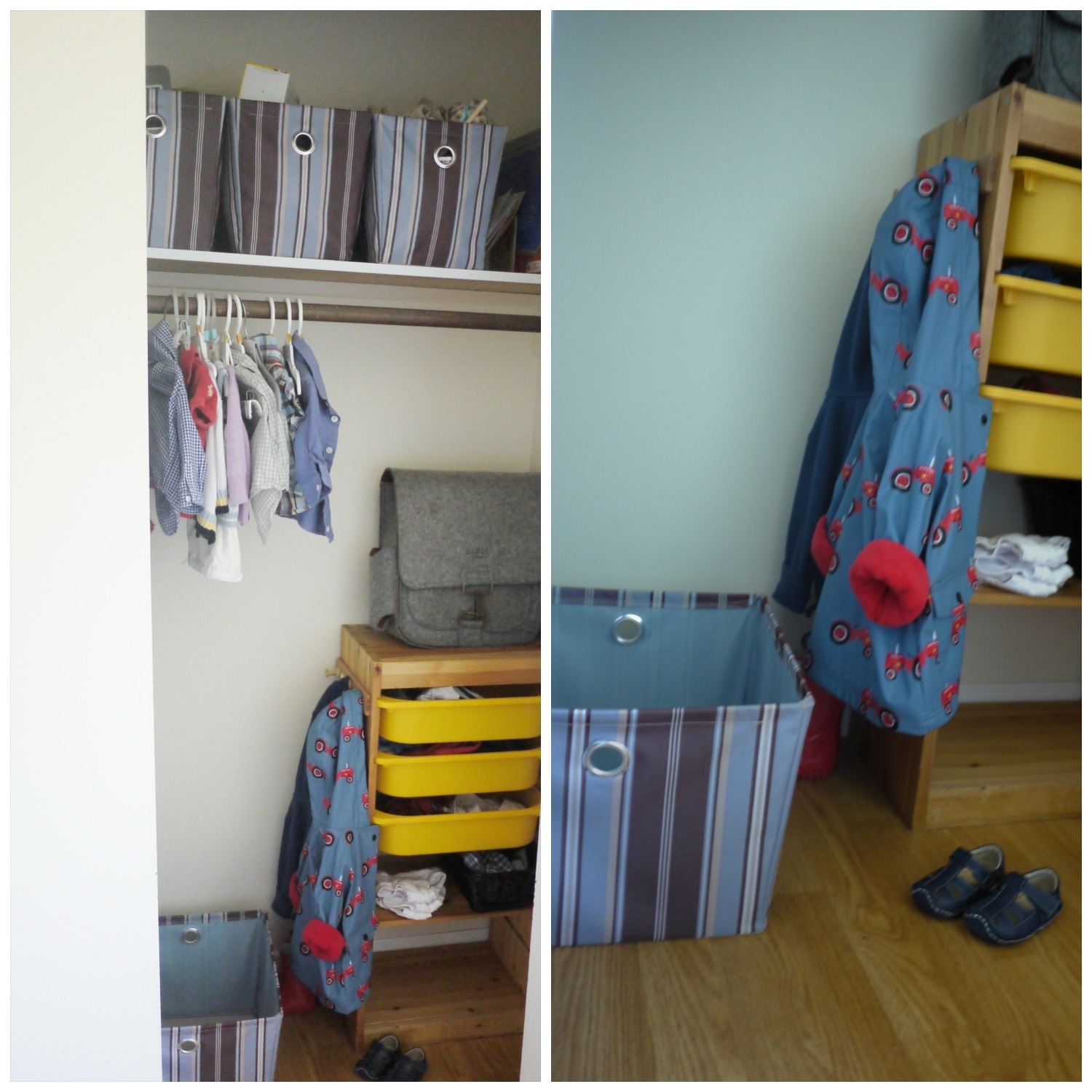
Quentin’s closet: from my perspective and his. The blue striped storage bins on the top shelf are where we keep the materials that are out of rotation, and some of his preemie clothes which I can’t bare to part with even though they make me sad sometimes. The clothes rail holds his special occasion clothes. The rest of his clothes (and there aren’t many) are stored in the easy to pull bins or on the shelves of the shelving unit. The bins are for the larger items (pants, shirts & pj’s), the shelves hold his underwear and his sock basket. Everything is at Quentin’s level so he can independently access his clothes, but the bins also provide me the opportunity to quickly clean up his closet without having to stop and hang everything on hangers. The large blue striped bin on the floor holds his dirty laundry.

20130809-200946.jpg

Lastly, there is the nursing/snuggling chair in the corner. The quilt on the back of the chair was presented to us in the hospital. The local quilting group presents every premature baby in the Neonatal Intensive Care Unit with a handmade quilt. I chose it before I even got to see him (other than the brief seconds after delivery before they rushed him away). It came home before him and has seemed to always be here. The books on the table are antiques of favourite stories, and some of my Montessori books.

Breast feeding a preemie is difficult to say the least. It was a ridiculous ordeal, but I stuck it out and he naturally weaned himself around his 1st Birthday. This spot remains one of our most favourite in the house. We still read stories before bed here, but it holds much more than that. For me it’s the hard work and effort and love of my child all wrapped into a cosy corner.

That’s his bedroom or most of it. I will have to photograph the artwork in another post.
I’m happy with it for the most part. It’s simple, beautiful and filled with natural light. It will work well, and is easily changeable to suit Quentin’s changing needs.